


Instead of relying on memory, paper binders, or scattered spreadsheets, teams can use one system to capture records as work happens. That shift changes audits from a high-stakes event into a review of what is already organized.
What makes audits so stressful for food businesses?
Audits become stressful when documentation is incomplete, inconsistent, or hard to retrieve quickly. When teams cannot prove that checks were done, corrective actions were taken, and issues were prevented from recurring, they are forced into last-minute reconstruction.
Another stress driver is uncertainty. If responsibilities are unclear, staff may not know who owns a record, where it lives, or what “good enough” looks like for a standard such as HACCP, SQF, BRCGS, or ISO 22000.
How does a compliance system create “audit-ready” documentation every day?
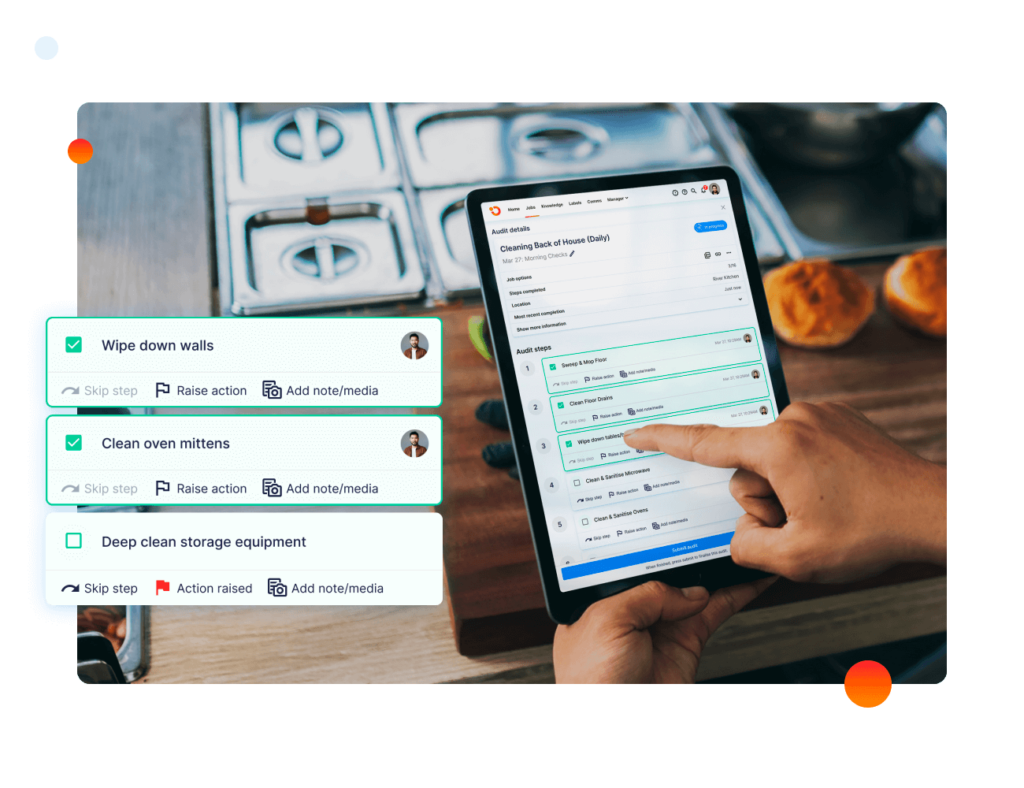
A robust food safety compliance system alleviates audit-related stress by integrating recordkeeping directly into daily workflows. Logs, checklists, and verification tasks are completed in real time and automatically stored with accurate timestamps and user attribution.
With a standardized food safety compliance system, teams no longer need to reinvent documentation formats. They can consistently demonstrate monitoring of critical limits, sanitation procedures, allergen controls, and supplier approvals without searching through folders or tracking down signatures, ensuring transparency and regulatory readiness.
How does centralized storage cut down the scramble during an audit?
Centralized storage means evidence is searchable and organized by program, site, line, product, or date. When an auditor asks for three months of temperature logs, a calibration certificate, or a corrective action record, teams can retrieve it quickly.
This reduces the “where is it?” spiral that often consumes audits. It also limits the risk of presenting outdated versions, missing pages, or documents stored on someone’s personal device.
How does automation reduce human error and missed checks?
Many audit findings come from small gaps, missed monitoring, incomplete fields, or late entries. A compliance system can use reminders, required fields, and escalation rules so critical tasks are not forgotten.
Automation also improves consistency. If a form requires a corrective action whenever a value is out of spec, the system can prompt the user immediately, rather than allowing a nonconformance to sit unnoticed until the audit.
How does it help prove corrective actions and preventive controls?
Auditors rarely want to see only that a problem was noticed. They want evidence that the issue was contained, investigated, corrected, and prevented from recurring.
A compliance system links nonconformances to root cause analysis, corrective and preventive actions, verification steps, and closure approvals. That connected chain helps them demonstrate control, not just awareness.
How does better traceability lower the pressure of “show me” requests?
Traceability requests can escalate stress fast, especially if ingredient records, production lots, and distribution data are stored in different places. A compliance system supports faster trace and recall readiness by structuring how lot codes, supplier details, and production records are captured.
When auditors ask for a mock recall, teams can respond with clear timelines and supporting evidence. Faster traceability also signals maturity, which can reduce the intensity of follow-up questioning.
How does it improve accountability across shifts, sites, and teams?
Audit stress often spikes when handoffs are weak. One shift may not know what the previous shift recorded, or one site may follow a different process than another.
A compliance system assigns tasks, logs who completed them, and maintains a single source of truth. That clarity reduces internal finger-pointing and makes it easier to show auditors that the program works consistently, even when staff changes or production ramps up.
How does it help standardize HACCP and prerequisite programs?
HACCP plans depend on steady execution of prerequisite programs such as sanitation, pest control, allergen management, and training. A compliance system can standardize how those programs are documented, verified, and reviewed.
This lowers audit stress because teams can show a coherent food safety management system. They are not presenting isolated documents, but an integrated set of controls with evidence of monitoring and management review.
How does real-time visibility help managers stay ahead of issues?
Managers feel less stress when they can see compliance status before an auditor does. Dashboards and alerts allow them to spot overdue tasks, repeat deviations, or high-risk areas early.
That visibility supports proactive coaching and resource allocation. Instead of discovering gaps during the audit, they can close them during routine operations, when fixes are cheaper and calmer.
How does it reduce audit-day disruption to production?
Audits can disrupt production when staff are pulled away to search for documents, answer repeated questions, or recreate missing records. A compliance system reduces those disruptions by shortening retrieval time and clarifying ownership.
When evidence is easy to access, fewer people need to be involved. The audit becomes more focused, and operations can keep running with minimal interruption.
How should they choose a system that actually reduces stress?
They should prioritize usability, fit to their standards, and reporting strength over fancy features. If staff find the system hard to use, they will bypass it, which brings the stress back.
They should look for strong document control, configurable checklists, corrective action workflows, traceability support, and simple audit reporting. Implementation support and training also matter, because adoption is what turns software into audit readiness.
What is the practical takeaway for reducing audit stress?
A food safety compliance system reduces audit stress by making compliance continuous rather than episodic. When records are captured daily, stored centrally, linked to actions, and easy to report, audits become confirmation instead of crisis.
They do not eliminate audits, but they eliminate the scramble. The calmer audit is usually the one where the system has been doing the remembering, organizing, and proving all along.
FAQs (Frequently Asked Questions)
What causes audits to be stressful for food businesses?
Audits become stressful when documentation is incomplete, inconsistent, or hard to retrieve quickly. Teams often scramble to prove that checks were done, corrective actions taken, and issues prevented from recurring, leading to last-minute reconstruction. Uncertainty about responsibilities and unclear standards also add to the stress.
How does a food safety compliance system help create audit-ready documentation every day?
A compliance system integrates recordkeeping into daily workflows by enabling real-time completion of logs, checklists, and verification steps. It automatically stores standardized records with timestamps and user attribution, eliminating the need to reinvent formats and ensuring consistent monitoring of critical limits, sanitation checks, allergen controls, and supplier approvals.
In what ways does centralized storage reduce the scramble during audits?
Centralized storage organizes evidence by program, site, line, product, or date and makes it searchable. This allows teams to quickly retrieve specific documents like temperature logs or calibration certificates when requested by auditors, reducing time wasted searching and minimizing risks of presenting outdated or incomplete records.
How does automation in compliance systems minimize human error and missed checks?
Automation incorporates reminders, required fields, and escalation rules that prevent critical tasks from being forgotten or overlooked. It prompts users immediately when values are out of specification, ensuring timely corrective actions and improving consistency across all monitoring activities.
Why is proving corrective actions and preventive controls important during audits?
Auditors look for evidence that identified problems were not only noticed but contained, investigated thoroughly, corrected effectively, and prevented from recurring. Compliance systems link nonconformances with root cause analysis, corrective/preventive actions, verification steps, and closure approvals to demonstrate full control over food safety issues.
How can a compliance system improve accountability across shifts, sites, and teams?
Compliance systems assign tasks clearly, log who completed them with timestamps, and maintain a single source of truth accessible to all relevant staff. This clarity reduces internal finger-pointing during audits and ensures consistent application of food safety programs even amid staff changes or production increases.
Click here for about: Food Safety and Compliance: Why Real-Time Visibility Matters